Donwload our latest Guide
User research,
Without
Synthetic Users lets you predict human behavior before the market does. Think of us like a recruitment agency for research participants, only faster and far more insightful.

“The AI feedback lined up with human feedback over 95% of the time."

Adam King
Behavioural Scientist
"What you are building will radically democratize access to qualitative research within companies."

Johan Van Langendonck
Director of Strategy, Bridgestone Mobility Solutions
trusted by teams aT
85 – 92%
Synthetic-organic parity in independent comparison studies
Measured across thematic overlap, depth & qualitative alignment
21+
Peer-reviewed papers supporting the synthetic research thesis
Incl. Science Magazine, The Atlantic, SAGE Journals
$2-60
Per interview, versus $100+ with traditional research agencies
No recruitment fees, no scheduling overhead
SOC 2
Your data is private and belongs to you alone.
Measured across thematic overlap, depth & qualitative alignment
Use Cases
Where synthetic research fits your workflow
Synthetic Users is designed as a discovery co-pilot, not a replacement for real research. Use it to front-load the problem space, fine-tune your questions, and spend your organic research budget where it matters most.
01
Early exploration & problem discovery
Map the problem space before committing to a full study. Run Problem Exploration interviews to surface user behaviors, pain points, and context — and arrive at organic research with better questions.
02
Concept & messaging testing
Test ideas, product concepts, and campaign messaging before launch. Use Concept Testing and Custom Script interviews to get structured feedback on multiple directions in parallel — in minutes, not weeks.
03
Continuous insight between research phases
Fill the gaps when traditional research is too slow, too expensive, or impossible to schedule. Run iterative validation studies throughout the product lifecycle — not just at milestone moments.
Who It's For
Built for anyone who needs to understand people faster
Synthetic Users isn't a researchers-only tool. Our demo calls include PMs, marketing leads, agency owners, innovation managers, and engineering leads anyone whose decisions depend on understanding users.
UX & Product Research
Product Management
Agencies & Consultancies
Marketing & Brand

UX & Product Research
Front-load the problem space with synthetic interviews. Arrive at organic research sessions with sharper questions and stronger hypotheses. Spend your participant budget where nuance matters most.
UX & Product Research
Product Management
Agencies & Consultancies
Marketing & Brand

UX & Product Research
Front-load the problem space with synthetic interviews. Arrive at organic research sessions with sharper questions and stronger hypotheses. Spend your participant budget where nuance matters most.
How it works
A research workflow.
Not a chat interface.
Synthetic Users uses a multi-agent architecture where AI participants develop individual personality profiles (based on the OCEAN model) and maintain full context and continuity across every interview — the thing general AI tools can't do.
01
Define your audience
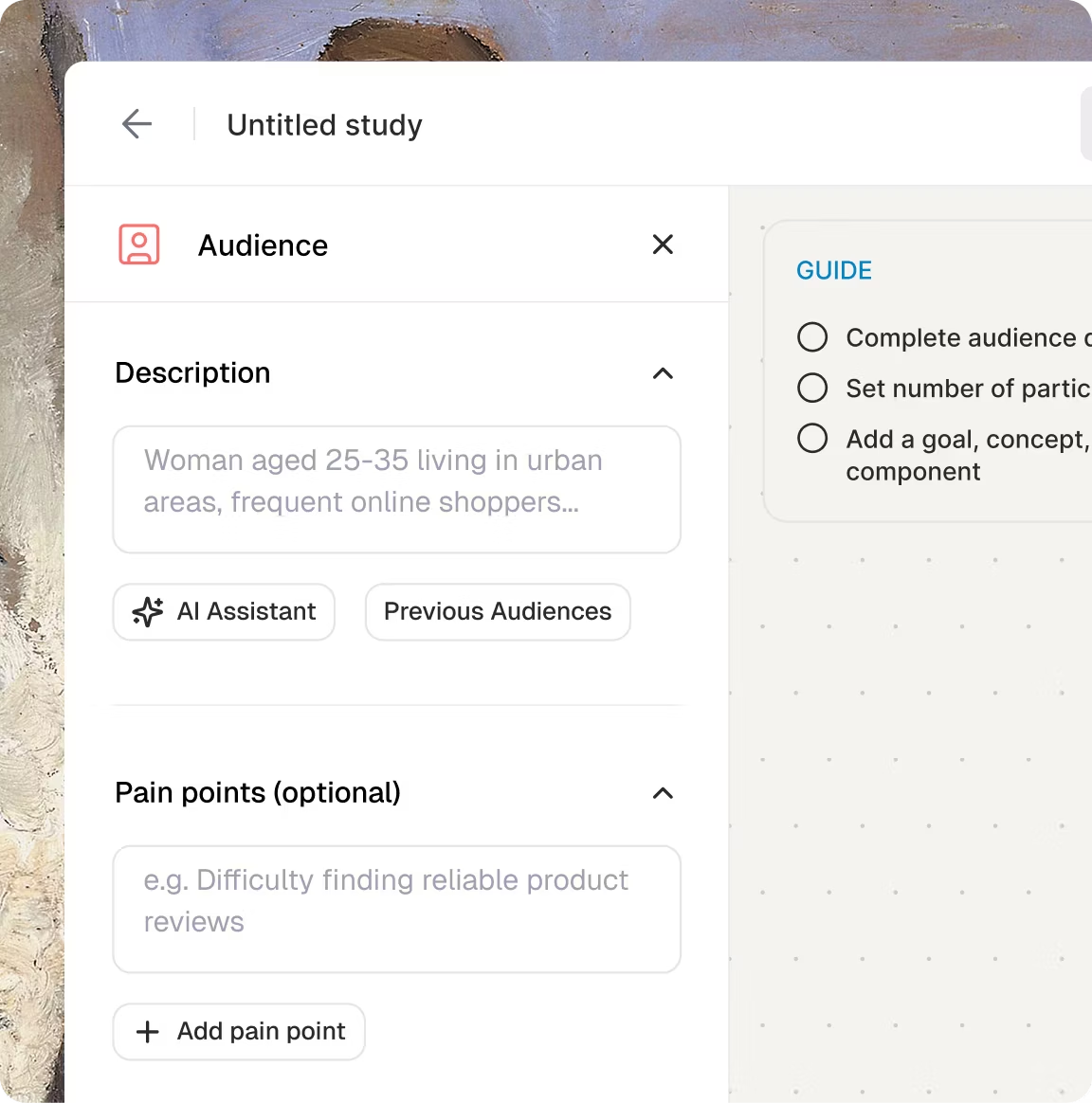
Specify your target participant in as much detail as you need — demographics, behaviours, psychographics, profession. The more specific you are, the more specific your output. No recruitment or screener required.
Plan your study
Run the interviews
Get your insights report

01
Define your audience
Specify your target participant in as much detail as you need — demographics, behaviours, psychographics, profession. The more specific you are, the more specific your output. No recruitment or screener required.
Plan your study
Run the interviews
Get your insights report

the science
We obsess over
synthetic-organic parity
The most common question we get is: how do we know it's accurate? We're very open about how we measure it, where we fall short, and how we improve. Here's how we think about it.
How we Measure Accuracy
We run real comparison studies — and publish the results
We regularly run the same interview scripts with both organic participants and Synthetic Users, then measure parity across thematic overlap, depth of insight, comprehensiveness, and qualitative alignment. Our current parity score sits at 85–92% depending on audience type.
How we Measure Accuracy
We run real comparison studies — and publish the results
We regularly run the same interview scripts with both organic participants and Synthetic Users, then measure parity across thematic overlap, depth of insight, comprehensiveness, and qualitative alignment. Our current parity score sits at 85–92% depending on audience type.
How we handle bias
Bias is a parameter — not a hidden variable
Every model has biases. We surface them explicitly when generating Synthetic Users, letting you adjust and control for them rather than pretending they don't exist. With organic research you note biases in your writeup; with Synthetic Users, you set them upfront.
How we handle bias
Bias is a parameter — not a hidden variable
Every model has biases. We surface them explicitly when generating Synthetic Users, letting you adjust and control for them rather than pretending they don't exist. With organic research you note biases in your writeup; with Synthetic Users, you set them upfront.
What the research says
21+ peer-reviewed papers support the synthetic research approach
LLM-powered synthetic participants have crossed from concept to validated method. Featured in Science Magazine, The Atlantic, and SAGE Journals — the academic case for synthetic research has never been stronger. Gartner cited Synthetic Users as a leader in their latest report.
What the research says
21+ peer-reviewed papers support the synthetic research approach
LLM-powered synthetic participants have crossed from concept to validated method. Featured in Science Magazine, The Atlantic, and SAGE Journals — the academic case for synthetic research has never been stronger. Gartner cited Synthetic Users as a leader in their latest report.
The right way to use it
Invert the process. Don't replace it.
The teams getting most value run Synthetic Users first — covering the problem space broadly, refining their questions — then spend their organic research budget on the depth only real humans can provide. Synthetic Users accelerates the process. It doesn't shortcut it.
The right way to use it
Invert the process. Don't replace it.
The teams getting most value run Synthetic Users first — covering the problem space broadly, refining their questions — then spend their organic research budget on the depth only real humans can provide. Synthetic Users accelerates the process. It doesn't shortcut it.
what people say
From the people
using it every day
“What you are building is absolutely massive. This is a breakthrough for people wanting to validate an idea, look at how to solve a problem and accelerate the validation of hypotheses.”


Henrick Farías
Founding Team @Jeeves
“I just tried your product and I’m honestly scared. This reminded me of an episode of black mirror.”


Diego Jorge
Product Manager @Jeeves
“What you are building will radically democratize access to qualitative research within companies.”


Johan Van Langendonck
Director of Strategy, M&A and Partnerships at Bridgestone Mobility Solutions
“Oh! And I'm also someone who's used Synthetic Users to give me starting intelligence to then go and confirm that feedback with real life people. And guess what? The AI feedback lined up with human feedback over 95% of the time.”


Adam King
Behavioral Scientist
Sample output
What you actually get back
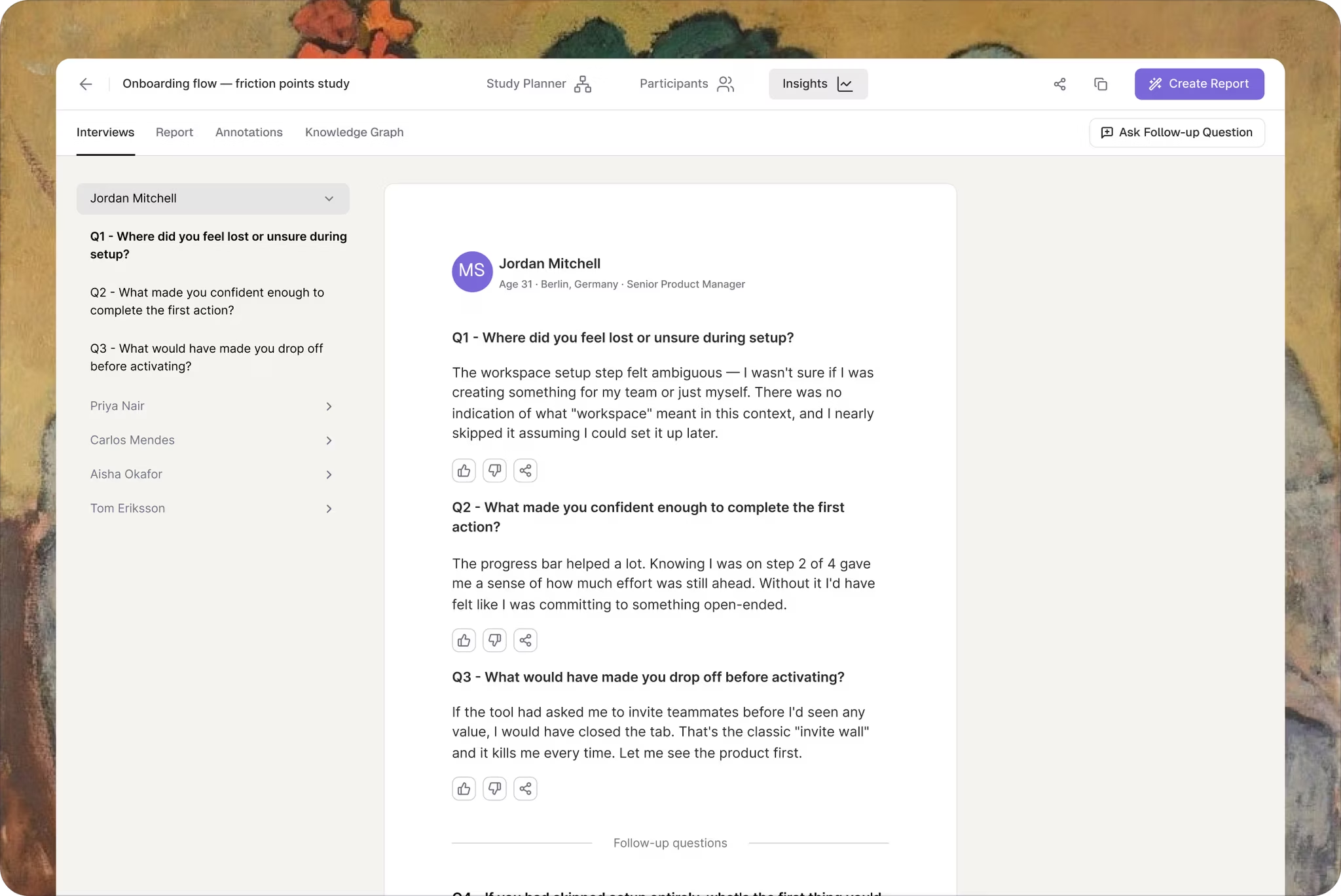
The report includes an executive summary, key themes, verbatim participant quotes, and recommendations — formatted for stakeholder sharing. You can also drill into individual transcripts, ask follow-up questions, and annotate specific moments.
Our pro tip: start with a recent study you have top of mind and run it through Synthetic Users. Compare the outputs side by side. That's the fastest way to build confidence in the method.
Interview Result
Report
JR
James Rivera
Age 29 · Austin, TX · Product Manager
Q1: Can you describe what a typical night shift looks like for you from start to finish?
shifts slightly in chair
Right, so I get to the ward around 9:45pm, bit early to get myself sorted before handover at 10. The day staff fill us in on what's been happening with each patient - who's had a rough day, new admissions, any special instructions from the doctors. Takes about twenty minutes usually.

After that, it's straight into the medication rounds with the nurses. I help get patients settled for the night - you know, making sure they're comfortable, checking if anyone needs extra pillows or blankets. Some of the older patients get a bit anxious at night, so I spend time just having a chat with them.
Around midnight we usually grab a quick cuppa in the staff room. I work with the same team most nights - Sarah, the charge nurse, and Jenny who's been here even longer than me. We catch up a bit, nothing too exciting, just... keeps us going.
The middle hours are when things can get tricky. Patients wake up confused, need help to the toilet, or sometimes there's an emergency. I do the regular checks - making sure everyone's breathing okay, turning patients who can't move themselves, that sort of thing.
We get another break around 3am if we're lucky, but sometimes it's just grabbing tea and drinking it while we work. By 5am we're starting to get people ready who have early procedures, and then it's handover to the day shift at 6.
rubs eyes slightly
Some nights fly by, others drag on forever. Depends what happens really.
Q2: How do your energy levels and mood change throughout the night?
shifts position
Oh, that's... it's like a roller coaster really. I start off feeling pretty alert - I've had my dinner, maybe a bit of caffeine, ready to go. But around 2 or 3am, that's when it hits you like a brick wall. Your body just wants to shut down.
The thing is, you can't really show it, you know? The patients need you to be... present. So I've learned to just push through, but some nights I catch myself staring at the wall for a moment longer than I should.
pauses
The mood thing is harder to explain. Early on, I'm quite chatty with the team, having a laugh during our tea break. But by the middle of the night, we all get a bit... quiet. Not grumpy exactly, just more focused I suppose. Less talking, more just getting on with it.
Sarah always says something daft around 3am to try and perk us up. Last week she started doing this silly voice when she was reading the medication chart. Made me smile even though I felt like rubbish.
The weird bit is around 5am - sometimes you get this second wind. Maybe it's knowing you're nearly done, or maybe it's just... I don't know, your body giving you one last push. But other times you're just counting down the minutes.
rubs back of neck
I'm usually pretty knackered by the time I get home. My partner's getting up for work and I'm ready to collapse.
Q3: What do you do during the shift to manage your energy levels, if anything?
pauses, thinking
Well, I've got my little routines, I suppose. The tea breaks are crucial - not just for the caffeine, but having that five minutes to sit down and have a proper chat with Sarah and Jenny. We'll talk about anything really - Jenny's always going on about her garden, or Sarah's complaining about her teenage daughter. It's... normal conversation, you know? Takes your mind off feeling tired.
I try to eat something proper around 1am. Brought from home usually - sandwich or leftover dinner. Some of the younger staff just grab crisps from the machine, but that just makes me feel worse later on.
shifts slightly
When I'm really flagging, I'll splash cold water on my face in the staff toilet. Sounds daft, but it helps for a bit. And I've learned to keep moving - if I sit down too long during the quiet periods, I just want to nod off.
The funny thing is, talking to the patients actually perks me up sometimes. There's this one gentleman, Mr. Patterson, who's always awake around 3am. He tells me stories about when he was young, worked on the railways. Keeps me alert listening to him.
rubs temples
What I don't do well is... well, sometimes I have that third cup of tea even though I know it'll keep me awake when I get home. And I probably should move around more, do some stretches or something, but honestly? When you get a moment to just stand still, you don't want to waste it.
I'm not very good at the whole... what do they call it, self-care thing. I just muddle through really.
Q4: When was the last time you used entertainment or content during your shift, if at all?
looks a bit sheepish
Entertainment during shift? Well, you're not really supposed to, are you? But...
glances around
In the staff room, we've got this old radio that's always on low. Usually it's just talk radio - Radio New Zealand or something. Nothing too exciting, but it's nice having voices in the background when we're doing our paperwork or having our breaks. Sometimes late at night they play music from the 80s and 90s, which is quite nice actually.
The shared computer at the nurses' station, that's mainly for patient records and that, but I'll admit... sometimes during the really quiet spells, if Sarah's not looking, I might check the news headlines or the weather for tomorrow. Takes about two minutes, nothing major.
fidgets slightly
My phone's just one of those basic ones - calls and texts, that's it. So I'm not scrolling through anything like the younger staff do. To be honest, I'm probably better off without all that... what do they call it, social media nonsense.
Last week though, Jenny brought in some audiobook about a detective story. We listened to a bit of it during our 3am break when things were really quiet. Made the time pass quicker, but then we got called away when Mrs. Chen needed help, so we never found out who did it.
shrugs
I suppose I'm just not really an entertainment-on-the-job sort of person. Too worried about getting caught not paying attention when I should be.
Q5: What helps you decide when to take a break during your shifts?
looks thoughtful
Honestly? It's not really up to me most of the time. The official breaks are set - we get them at midnight and around 3am if we're lucky. But you know how it is in healthcare, breaks get pushed back or cut short if someone needs help.
shifts in seat
The thing is, you can't just wander off when you fancy a sit down. I've got patients to check on, and Sarah needs to know where everyone is at all times. So it's more about... well, when she says "right, quick break now" we all pile into the staff room.
But there are those little moments where I'll make myself a quick cup of tea at the station when things are calm. Not a proper break, just... standing there for five minutes with a hot drink. Usually happens when the patients are all settled and the ward's quiet.
rubs forehead
I suppose I've learned to read the rhythm of the night. After the medication rounds, there's often a lull where people drift off to sleep. That's when I might grab that tea, or duck into the loo for a minute.
The tricky bit is knowing when you really need it versus just wanting it. Like, if I'm feeling properly lightheaded or my concentration's going, I'll ask Sarah if I can have five minutes. She's good about that - been doing this longer than me, knows when someone's struggling.
pauses
Sometimes though, you just have to push through. Can't leave patients waiting because you're tired, can you? That's just the job really. The breaks happen when they can happen, not when you need them most.
Q6: What types of content, if any, do you prefer during those breaks?
leans back slightly
Well, like I said, it's mostly just the radio in the staff room. I quite like the talk shows actually - nothing too heavy, just people having conversations about everyday things. Makes it feel less... isolated, I suppose, being up all night when the rest of the world's asleep.
pauses
Jenny's always trying to get us to listen to these podcasts on her phone, but I don't really get all that. Too much faffing about trying to find the right thing. The radio just... it's there, isn't it? Someone else has picked what to play.
When they do play music, I prefer the older stuff - things I know the words to. Bit of ABBA or Fleetwood Mac, that sort of thing. Nothing too loud or modern. Sarah's always trying to put on some pop station, but it just sounds like noise to me.
shifts position
That detective audiobook was quite good though. Something about following a story, having something to come back to during the next break. Made me wonder what happened next, kept my mind working even when I was back on the ward.
looks a bit uncertain
I tried reading magazines once - you know, those women's ones with all the celebrity gossip - but I couldn't concentrate. The words just swim about when you're tired. And honestly? I don't really care about what some actress wore to some party.
shrugs
I suppose I like things that don't require too much from me, if that makes sense. Just something gentle in the background while I'm having my tea and trying to wake up my brain a bit. Nothing that's going to wind me up or make me think too hard.
Q7: What constraints or challenges shape how you take breaks and use content during your shift, if any?
shifts forward slightly
Oh, there's loads of things really. The biggest one is just... you can't predict anything. You might sit down for your break and then someone's alarm goes off, or a patient falls trying to get to the bathroom. Happens all the time.
The noise is another thing. We have to keep everything really low in the staff room because it's right next to the ward. Can't have music blaring when people are trying to sleep, can we? So half the time you're straining to hear whatever's on the radio.
rubs neck
And the timing... our breaks don't line up with when the good programs are on. It's always the late-night stuff - reruns or those weird talk shows where people phone in about their problems. Not exactly riveting.
My phone's useless for anything beyond calling home, but even if I had one of those fancy ones, there's no time to be messing about with it. Sarah would have my head if she caught me watching videos when I should be checking on patients.
looks slightly frustrated
The worst bit is when you finally get five minutes and your brain's just... mush. Jenny was telling me about some program she loves, but when I tried to listen to it during break, I couldn't follow what was happening. Too tired to concentrate properly.
pauses
Plus there's always this guilt, isn't there? Like, should I really be sitting here listening to stories when Mrs. Williams down the hall might need something? Even on proper breaks, part of me's always listening for the call bell or footsteps in the corridor.
shrugs
It's just the nature of the job, really. Everything comes second to the patients.
Q8: In what situations do you find it most challenging to stay awake during your shift?
rubs eyes
Oh God, around 3 to 4am is just brutal. That's when your body's screaming at you to sleep, and if the ward's gone quiet... that's the danger zone really.
The worst is when I'm doing the hourly checks and everyone's actually sleeping peacefully for once. You're walking around in the dim lighting, it's warm, everything's calm, and your brain just starts switching off. I've caught myself standing at someone's bedside for way too long, just... staring at nothing.
shifts uncomfortably
Paperwork's another killer. Sitting at the desk updating charts when it's dead quiet - that's when I really struggle. The chair's not uncomfortable enough to keep you alert, and you're just writing the same things over and over. "Patient stable, no concerns." Your hand's moving but your mind's gone blank.
looks a bit embarrassed
There was this one time, I was in with Mr. Thompson helping him with his medication, and I just... zoned out completely. He had to ask me twice what the next tablet was for. Felt awful about that. He was so polite about it too, just said "Tired night, love?"
The really dangerous bit is when you're tired but something's actually happening - like someone's having breathing problems or there's been an accident. Your body floods with adrenaline and you're wide awake again, but then once it's sorted... crash. You feel even worse than before.
rubs back of neck
Winter's harder too. When it's dark and cold outside, and the heating's making the ward stuffy... it's like being wrapped in a blanket when you're already knackered.
Q9: What do you do to manage when you start feeling really tired during those challenging times?
shifts in chair, looking a bit tired just thinking about it
Well, the first thing is I try to keep moving. If I'm starting to feel my eyes getting heavy, I'll find something to do - maybe straighten up the supply cupboard or check if any of the water jugs need refilling. Anything to get my legs moving really.
The cold water trick I mentioned before - that's my go-to when I'm really struggling. Quick splash on the face, maybe splash some on my wrists too. Gives me about ten, fifteen minutes before it wears off.
pauses
I've learned to be honest with Sarah when I'm really flagging. She'd rather know than have me make a mistake, so I'll say "I need two minutes" and she'll cover for me. Sometimes she'll send me to do something that requires walking to the other end of the hospital - fetch supplies from the store room or something. Gets the blood moving.
looks slightly sheepish
If I'm sitting doing paperwork and my head's nodding, I'll... well, I'll pinch myself. Sounds daft, but it works. Or I'll press my fingernails into my palm under the desk. Just enough to snap me back.
The tea helps, but only so much. Too much and you're running to the loo every half hour, which isn't great when you're trying to work.
rubs temples
Sometimes I'll go chat to one of the patients who's awake - not for long, just a quick check-in. Having to actually talk to someone, be present for them, that usually perks me up. Can't exactly fall asleep mid-conversation, can you?
shrugs
But honestly? Some nights there's nothing for it. You just have to grit your teeth and push through. Count down the hours till 6am and hope nobody notices you moving a bit slower than usual.
Q10: What do you wish was different about your breaks or entertainment options during your shift, if anything?
leans forward slightly
You know what I really wish? That the breaks were actually guaranteed. Like, properly protected time where you know you won't get interrupted unless it's a real emergency. Not just someone needs their pillow fluffed or wants to chat because they can't sleep.
pauses
And maybe somewhere to go that's not right next to the ward. The staff room's tiny and stuffy, and you're always listening for the bells or commotion down the hall. Just... five minutes where you could properly switch off, you know?
looks thoughtful
I quite enjoyed that audiobook thing Jenny brought in, but it was frustrating only catching little bits of it. Something that you could pick up and put down easily would be nice. Not like watching a program where you miss half the story if you get called away.
shifts slightly
The radio's fine, but it would be lovely if there was something... I don't know, more suited to night workers? All the good programs are on during the day when normal people are awake. We get the dregs - repeats and those weird overnight shows.
rubs back of neck
Maybe just better chairs in the staff room? Sounds silly, but when your back's aching from being on your feet all night, those plastic chairs don't help. Something you could actually relax in for five minutes.
looks a bit wistful
What I really miss is just... normal break time conversation. During the day shifts, people chat about what they're doing at the weekend, their families, everyday things. Night shift, everyone's too tired for proper chat. We just sit there drinking tea in silence half the time.
shrugs
Nothing fancy really. Just breaks that actually feel like breaks, I suppose.

Sample output
What you actually get back
The report includes an executive summary, key themes, verbatim participant quotes, and recommendations — formatted for stakeholder sharing. You can also drill into individual transcripts, ask follow-up questions, and annotate specific moments.
Our pro tip: start with a recent study you have top of mind and run it through Synthetic Users. Compare the outputs side by side. That's the fastest way to build confidence in the method.
Interview Result
Report
JR
James Rivera
Age 29 · Austin, TX · Product Manager
Q1: Can you describe what a typical night shift looks like for you from start to finish?
shifts slightly in chair
Right, so I get to the ward around 9:45pm, bit early to get myself sorted before handover at 10. The day staff fill us in on what's been happening with each patient - who's had a rough day, new admissions, any special instructions from the doctors. Takes about twenty minutes usually.
After that, it's straight into the medication rounds with the nurses. I help get patients settled for the night - you know, making sure they're comfortable, checking if anyone needs extra pillows or blankets. Some of the older patients get a bit anxious at night, so I spend time just having a chat with them.
Around midnight we usually grab a quick cuppa in the staff room. I work with the same team most nights - Sarah, the charge nurse, and Jenny who's been here even longer than me. We catch up a bit, nothing too exciting, just... keeps us going.
The middle hours are when things can get tricky. Patients wake up confused, need help to the toilet, or sometimes there's an emergency. I do the regular checks - making sure everyone's breathing okay, turning patients who can't move themselves, that sort of thing.
We get another break around 3am if we're lucky, but sometimes it's just grabbing tea and drinking it while we work. By 5am we're starting to get people ready who have early procedures, and then it's handover to the day shift at 6.
rubs eyes slightly
Some nights fly by, others drag on forever. Depends what happens really.
Q2: How do your energy levels and mood change throughout the night?
shifts position
Oh, that's... it's like a roller coaster really. I start off feeling pretty alert - I've had my dinner, maybe a bit of caffeine, ready to go. But around 2 or 3am, that's when it hits you like a brick wall. Your body just wants to shut down.
The thing is, you can't really show it, you know? The patients need you to be... present. So I've learned to just push through, but some nights I catch myself staring at the wall for a moment longer than I should.
pauses
The mood thing is harder to explain. Early on, I'm quite chatty with the team, having a laugh during our tea break. But by the middle of the night, we all get a bit... quiet. Not grumpy exactly, just more focused I suppose. Less talking, more just getting on with it.
Sarah always says something daft around 3am to try and perk us up. Last week she started doing this silly voice when she was reading the medication chart. Made me smile even though I felt like rubbish.
The weird bit is around 5am - sometimes you get this second wind. Maybe it's knowing you're nearly done, or maybe it's just... I don't know, your body giving you one last push. But other times you're just counting down the minutes.
rubs back of neck
I'm usually pretty knackered by the time I get home. My partner's getting up for work and I'm ready to collapse.
Q3: What do you do during the shift to manage your energy levels, if anything?
pauses, thinking
Well, I've got my little routines, I suppose. The tea breaks are crucial - not just for the caffeine, but having that five minutes to sit down and have a proper chat with Sarah and Jenny. We'll talk about anything really - Jenny's always going on about her garden, or Sarah's complaining about her teenage daughter. It's... normal conversation, you know? Takes your mind off feeling tired.
I try to eat something proper around 1am. Brought from home usually - sandwich or leftover dinner. Some of the younger staff just grab crisps from the machine, but that just makes me feel worse later on.
shifts slightly
When I'm really flagging, I'll splash cold water on my face in the staff toilet. Sounds daft, but it helps for a bit. And I've learned to keep moving - if I sit down too long during the quiet periods, I just want to nod off.
The funny thing is, talking to the patients actually perks me up sometimes. There's this one gentleman, Mr. Patterson, who's always awake around 3am. He tells me stories about when he was young, worked on the railways. Keeps me alert listening to him.
rubs temples
What I don't do well is... well, sometimes I have that third cup of tea even though I know it'll keep me awake when I get home. And I probably should move around more, do some stretches or something, but honestly? When you get a moment to just stand still, you don't want to waste it.
I'm not very good at the whole... what do they call it, self-care thing. I just muddle through really.
Q4: When was the last time you used entertainment or content during your shift, if at all?
looks a bit sheepish
Entertainment during shift? Well, you're not really supposed to, are you? But...
glances around
In the staff room, we've got this old radio that's always on low. Usually it's just talk radio - Radio New Zealand or something. Nothing too exciting, but it's nice having voices in the background when we're doing our paperwork or having our breaks. Sometimes late at night they play music from the 80s and 90s, which is quite nice actually.
The shared computer at the nurses' station, that's mainly for patient records and that, but I'll admit... sometimes during the really quiet spells, if Sarah's not looking, I might check the news headlines or the weather for tomorrow. Takes about two minutes, nothing major.
fidgets slightly
My phone's just one of those basic ones - calls and texts, that's it. So I'm not scrolling through anything like the younger staff do. To be honest, I'm probably better off without all that... what do they call it, social media nonsense.
Last week though, Jenny brought in some audiobook about a detective story. We listened to a bit of it during our 3am break when things were really quiet. Made the time pass quicker, but then we got called away when Mrs. Chen needed help, so we never found out who did it.
shrugs
I suppose I'm just not really an entertainment-on-the-job sort of person. Too worried about getting caught not paying attention when I should be.
Q5: What helps you decide when to take a break during your shifts?
looks thoughtful
Honestly? It's not really up to me most of the time. The official breaks are set - we get them at midnight and around 3am if we're lucky. But you know how it is in healthcare, breaks get pushed back or cut short if someone needs help.
shifts in seat
The thing is, you can't just wander off when you fancy a sit down. I've got patients to check on, and Sarah needs to know where everyone is at all times. So it's more about... well, when she says "right, quick break now" we all pile into the staff room.
But there are those little moments where I'll make myself a quick cup of tea at the station when things are calm. Not a proper break, just... standing there for five minutes with a hot drink. Usually happens when the patients are all settled and the ward's quiet.
rubs forehead
I suppose I've learned to read the rhythm of the night. After the medication rounds, there's often a lull where people drift off to sleep. That's when I might grab that tea, or duck into the loo for a minute.
The tricky bit is knowing when you really need it versus just wanting it. Like, if I'm feeling properly lightheaded or my concentration's going, I'll ask Sarah if I can have five minutes. She's good about that - been doing this longer than me, knows when someone's struggling.
pauses
Sometimes though, you just have to push through. Can't leave patients waiting because you're tired, can you? That's just the job really. The breaks happen when they can happen, not when you need them most.
Q6: What types of content, if any, do you prefer during those breaks?
leans back slightly
Well, like I said, it's mostly just the radio in the staff room. I quite like the talk shows actually - nothing too heavy, just people having conversations about everyday things. Makes it feel less... isolated, I suppose, being up all night when the rest of the world's asleep.
pauses
Jenny's always trying to get us to listen to these podcasts on her phone, but I don't really get all that. Too much faffing about trying to find the right thing. The radio just... it's there, isn't it? Someone else has picked what to play.
When they do play music, I prefer the older stuff - things I know the words to. Bit of ABBA or Fleetwood Mac, that sort of thing. Nothing too loud or modern. Sarah's always trying to put on some pop station, but it just sounds like noise to me.
shifts position
That detective audiobook was quite good though. Something about following a story, having something to come back to during the next break. Made me wonder what happened next, kept my mind working even when I was back on the ward.
looks a bit uncertain
I tried reading magazines once - you know, those women's ones with all the celebrity gossip - but I couldn't concentrate. The words just swim about when you're tired. And honestly? I don't really care about what some actress wore to some party.
shrugs
I suppose I like things that don't require too much from me, if that makes sense. Just something gentle in the background while I'm having my tea and trying to wake up my brain a bit. Nothing that's going to wind me up or make me think too hard.
Q7: What constraints or challenges shape how you take breaks and use content during your shift, if any?
shifts forward slightly
Oh, there's loads of things really. The biggest one is just... you can't predict anything. You might sit down for your break and then someone's alarm goes off, or a patient falls trying to get to the bathroom. Happens all the time.
The noise is another thing. We have to keep everything really low in the staff room because it's right next to the ward. Can't have music blaring when people are trying to sleep, can we? So half the time you're straining to hear whatever's on the radio.
rubs neck
And the timing... our breaks don't line up with when the good programs are on. It's always the late-night stuff - reruns or those weird talk shows where people phone in about their problems. Not exactly riveting.
My phone's useless for anything beyond calling home, but even if I had one of those fancy ones, there's no time to be messing about with it. Sarah would have my head if she caught me watching videos when I should be checking on patients.
looks slightly frustrated
The worst bit is when you finally get five minutes and your brain's just... mush. Jenny was telling me about some program she loves, but when I tried to listen to it during break, I couldn't follow what was happening. Too tired to concentrate properly.
pauses
Plus there's always this guilt, isn't there? Like, should I really be sitting here listening to stories when Mrs. Williams down the hall might need something? Even on proper breaks, part of me's always listening for the call bell or footsteps in the corridor.
shrugs
It's just the nature of the job, really. Everything comes second to the patients.
Q8: In what situations do you find it most challenging to stay awake during your shift?
rubs eyes
Oh God, around 3 to 4am is just brutal. That's when your body's screaming at you to sleep, and if the ward's gone quiet... that's the danger zone really.
The worst is when I'm doing the hourly checks and everyone's actually sleeping peacefully for once. You're walking around in the dim lighting, it's warm, everything's calm, and your brain just starts switching off. I've caught myself standing at someone's bedside for way too long, just... staring at nothing.
shifts uncomfortably
Paperwork's another killer. Sitting at the desk updating charts when it's dead quiet - that's when I really struggle. The chair's not uncomfortable enough to keep you alert, and you're just writing the same things over and over. "Patient stable, no concerns." Your hand's moving but your mind's gone blank.
looks a bit embarrassed
There was this one time, I was in with Mr. Thompson helping him with his medication, and I just... zoned out completely. He had to ask me twice what the next tablet was for. Felt awful about that. He was so polite about it too, just said "Tired night, love?"
The really dangerous bit is when you're tired but something's actually happening - like someone's having breathing problems or there's been an accident. Your body floods with adrenaline and you're wide awake again, but then once it's sorted... crash. You feel even worse than before.
rubs back of neck
Winter's harder too. When it's dark and cold outside, and the heating's making the ward stuffy... it's like being wrapped in a blanket when you're already knackered.
Q9: What do you do to manage when you start feeling really tired during those challenging times?
shifts in chair, looking a bit tired just thinking about it
Well, the first thing is I try to keep moving. If I'm starting to feel my eyes getting heavy, I'll find something to do - maybe straighten up the supply cupboard or check if any of the water jugs need refilling. Anything to get my legs moving really.
The cold water trick I mentioned before - that's my go-to when I'm really struggling. Quick splash on the face, maybe splash some on my wrists too. Gives me about ten, fifteen minutes before it wears off.
pauses
I've learned to be honest with Sarah when I'm really flagging. She'd rather know than have me make a mistake, so I'll say "I need two minutes" and she'll cover for me. Sometimes she'll send me to do something that requires walking to the other end of the hospital - fetch supplies from the store room or something. Gets the blood moving.
looks slightly sheepish
If I'm sitting doing paperwork and my head's nodding, I'll... well, I'll pinch myself. Sounds daft, but it works. Or I'll press my fingernails into my palm under the desk. Just enough to snap me back.
The tea helps, but only so much. Too much and you're running to the loo every half hour, which isn't great when you're trying to work.
rubs temples
Sometimes I'll go chat to one of the patients who's awake - not for long, just a quick check-in. Having to actually talk to someone, be present for them, that usually perks me up. Can't exactly fall asleep mid-conversation, can you?
shrugs
But honestly? Some nights there's nothing for it. You just have to grit your teeth and push through. Count down the hours till 6am and hope nobody notices you moving a bit slower than usual.
Q10: What do you wish was different about your breaks or entertainment options during your shift, if anything?
leans forward slightly
You know what I really wish? That the breaks were actually guaranteed. Like, properly protected time where you know you won't get interrupted unless it's a real emergency. Not just someone needs their pillow fluffed or wants to chat because they can't sleep.
pauses
And maybe somewhere to go that's not right next to the ward. The staff room's tiny and stuffy, and you're always listening for the bells or commotion down the hall. Just... five minutes where you could properly switch off, you know?
looks thoughtful
I quite enjoyed that audiobook thing Jenny brought in, but it was frustrating only catching little bits of it. Something that you could pick up and put down easily would be nice. Not like watching a program where you miss half the story if you get called away.
shifts slightly
The radio's fine, but it would be lovely if there was something... I don't know, more suited to night workers? All the good programs are on during the day when normal people are awake. We get the dregs - repeats and those weird overnight shows.
rubs back of neck
Maybe just better chairs in the staff room? Sounds silly, but when your back's aching from being on your feet all night, those plastic chairs don't help. Something you could actually relax in for five minutes.
looks a bit wistful
What I really miss is just... normal break time conversation. During the day shifts, people chat about what they're doing at the weekend, their families, everyday things. Night shift, everyone's too tired for proper chat. We just sit there drinking tea in silence half the time.
shrugs
Nothing fancy really. Just breaks that actually feel like breaks, I suppose.

Sample output
What you actually get back
The report includes an executive summary, key themes, verbatim participant quotes, and recommendations — formatted for stakeholder sharing. You can also drill into individual transcripts, ask follow-up questions, and annotate specific moments.
Our pro tip: start with a recent study you have top of mind and run it through Synthetic Users. Compare the outputs side by side. That's the fastest way to build confidence in the method.
Interview Result
Report

Executive Summary
This report presents findings from 8 synthetic user interviews evaluating the enterprise onboarding experience for a B2B SaaS analytics platform. Participants represented a mix of product managers, data analysts, and engineering leads across mid-market and enterprise organizations. The study focused on first-run experience, team workspace setup, and integration configuration workflows.
Key Findings
Strong demand for guided setup
7 out of 8 participants expressed a preference for a step-by-step onboarding wizard over self-service documentation. Users wanted clear progress indicators and the ability to skip non-essential steps.
Integration setup is the main friction point
Connecting third-party tools (Slack, Jira, GitHub) was cited as the most confusing step. Participants struggled with permission scoping and were unsure which integrations were required versus optional.
Team invitation flow needs clarity
Participants were unclear about role-based permissions when inviting team members. Admin vs. viewer vs. editor distinctions felt ambiguous, and several users wanted a way to bulk-invite via CSV or domain-based auto-join.
Insights
Enterprise users expect onboarding to mirror their existing workflows.
The mental model is heavily shaped by tools like Notion, Linear, and Figma — platforms that offer opinionated defaults with room for customization.
Users don't want a blank canvas; they want a pre-configured workspace they can refine.
Time-to-value expectations are under 15 minutes for initial setup.
Recommendations
Implement a progressive onboarding wizard with clear step indicators and estimated completion time.
Add contextual tooltips during integration setup that explain permission requirements in plain language.
Introduce workspace templates (e.g., "Product Team", "Engineering", "Design") that pre-configure dashboards and integrations.
Simplify team invitations with domain-based auto-join and CSV bulk import.
Add a "Quick Start" option that defers non-critical setup steps to a checklist accessible from the dashboard.
Ask Follow Up Question
FAQ
The questions we hear on every demo call
The questions we
hear
on every demo call
Is this meant to replace real user research?
How accurate are the synthetic participants?
How is this different from asking ChatGPT?
Is 10 participants enough? We normally need statistical significance.
Can we use our own proprietary data to enrich the participants?
What are the security and compliance requirements?
get started
See what your team
could learn this week.
See what your team could learn this week.
30 minutes. We'll run a live study with you, show you
the output, and answer every question on your list.
30 minutes. We'll run a live study with you, show you the output, and answer every question on your list.
Signup to our newsletter
AI-powered user research platform that replaces traditional participant recruitment with synthetic agents. Get research-grade insights in minutes, not weeks.
© 2026 Synthetic Users Inc.
Signup to our newsletter
AI-powered user research platform that replaces traditional participant recruitment with synthetic agents. Get research-grade insights in minutes, not weeks.
© 2026 Synthetic Users Inc.
Signup to our newsletter
AI-powered user research platform that replaces traditional participant recruitment with synthetic agents. Get research-grade insights in minutes, not weeks.
© 2026 Synthetic Users Inc.